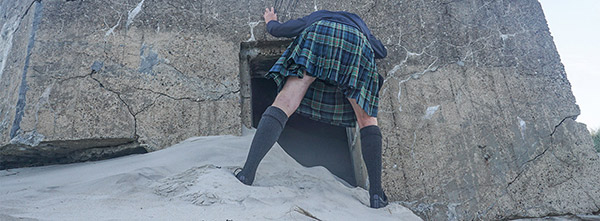
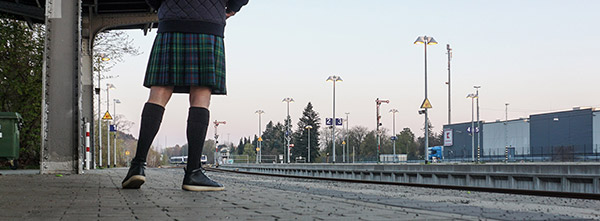
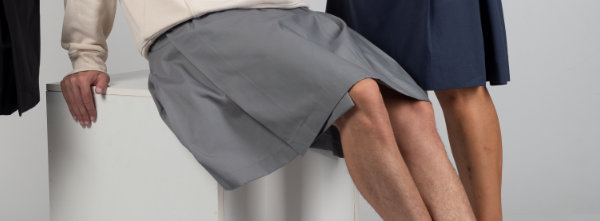
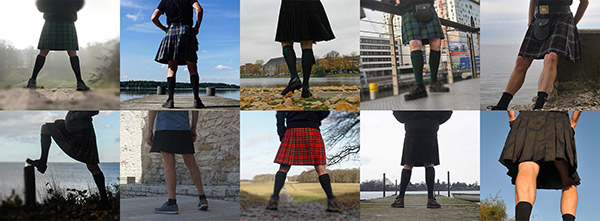
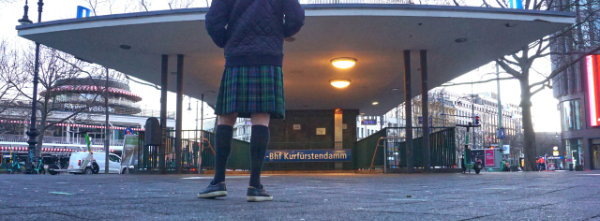
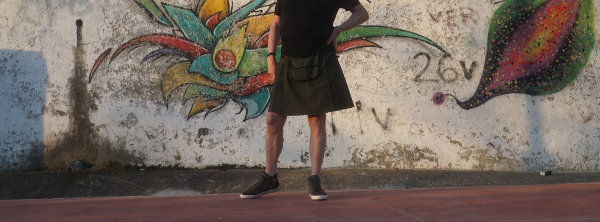
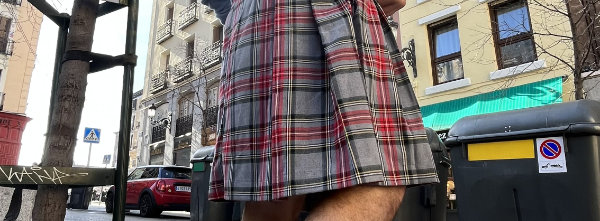
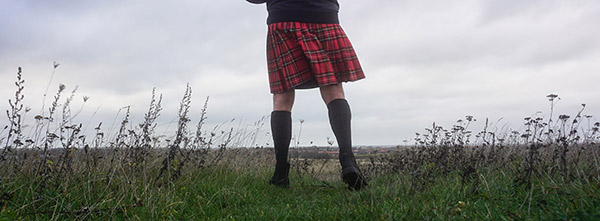
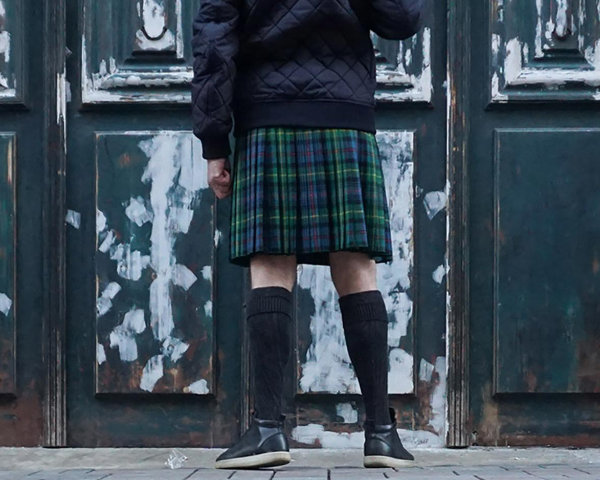
Who will wear a kilt?
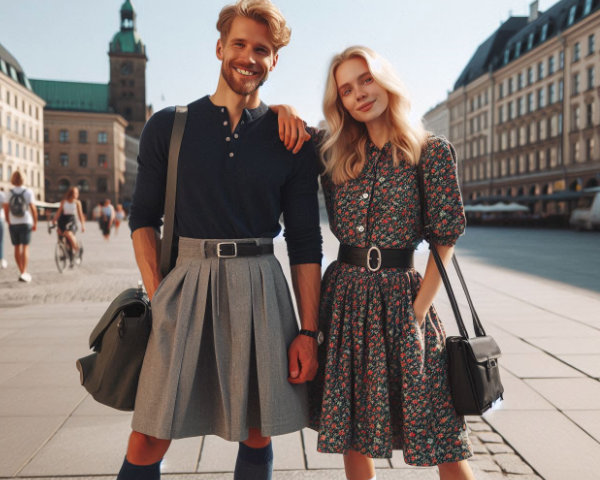
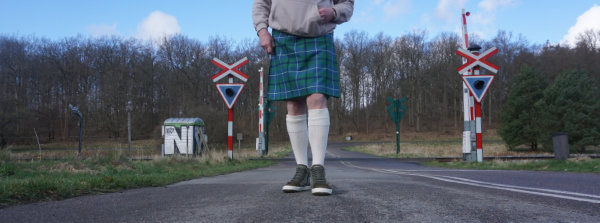
No valid statistics exists, but from kilt forums and the like it is my impression that men in kilts demographically on most criteria (age, civil status, family size, education, and income) will resemble men in general. Accordingly, the main difference between men in kilts and men in general is - the kilt.
They have just found out that wearing a kilt makes sense to them.
By the way, kilt wearing has nothing to do with sexual preferences. I mention this, because ignorant people often question such things and will connect everything they don’t understand – which can be pretty much – with sexual deviating.
Why wear a kilt?
If not part of a national dress or a garment to be worn in order to honour Scottish heritage, what then could make men, wish to wear a kilt?
There are numerous reasons of which the following seem to be the most important:
1. The kilt is probably the most comfortable manly garment available
Just think of anatomy. Should clothing be invented from scratch it is likely that rest rooms signs should be interchanged, because trousers would be the primary choice of women (they already are), whereas skirted garments should probably be preferred by men, because of anatomy and a lot of jobs no longer requiring them.
2. The kilt is versatile
A casual kilt, for example, can with a few accessories be upgraded to rather formal functions,
not possible with blue jeans or shorts. In most European countries a kilt can be worn year-round.
At temperatures between -3 and 30 C it is perfect.
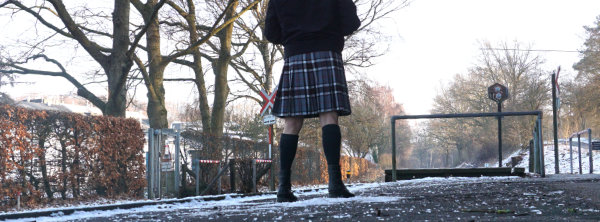
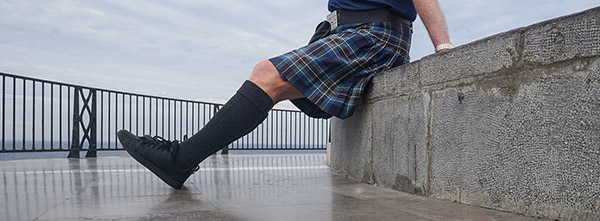
In winter, your knees are uncovered, but they aren’t cold. The kilt itself with its four to seven meters of fabric, as well as the kilt hose, will keep the remaining parts of your legs efficiently protected against coldness. Your only problem might be all the people freezing in their trousers asking you if you are not cold.
In summer the kilt is protecting against heat - and sun. In fact, on most days you’ll feel more comfortable than when in shorts.
3. The kilt is different
The manly wardrobe might not be the most inspiring thing the world has seen.
4. The kilt looks good
This is my opinion. And it might be yours too.
5. The kilt provides a lot of variety
Thousands of tartans are available, and the kilt itself shall make a splendid addition to your wardrobe, because you no longer have to wear trousers all the time.
6. You stand out from the crowd
- even if by far less than you might fear - or hope for.
7. Health aspects might apply
- again, due to anatomy and form follows function.
Is it true?
 Underwear banned?
Underwear is not banned, at least not in private life.
In kilted Scottish regiments underwear was (still is?) not a part of the uniform and accordingly forbidden to wear. It is said that sometimes, at assembly there were inspections by means of a mirror on a stick. If underwear was seen in the mirror the soldier would be punished. Today a selfie stick had been the thing to use.
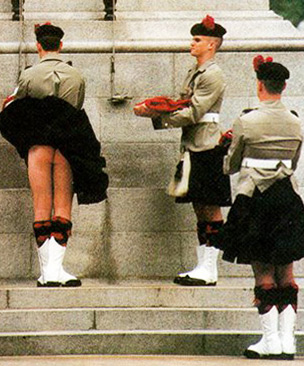 Scottish soldier, Hong Kong, 1997.
Wearing the kilt as a
true Scotsman is therefore called
going regimental or
commando.
And yes, to quite a few, it is true. As a matter of fact:
Four out of ten men in kilts are going commando
What is actually worn under the kilt has been revealed in a 2016
YouGov research.
According to this, 55% of men in kilts will wear underpants, 38% are going commando, and the remaining 7% are wearing something else. Suggested are shorts, tights, and leggings. But probably also
kilt liners. They are to protect the kilt against the wearer while he is still having the feeling of going commando. You may read more about kilt liners on the page
Kilt accessories.
Whatever your choice you better keep it to yourself. If asked - and you will be, believe me - my advice is to never give a definite answer.
The
uncertainty about the "secret" may very well be the reason why the kilt is still so very much alive!
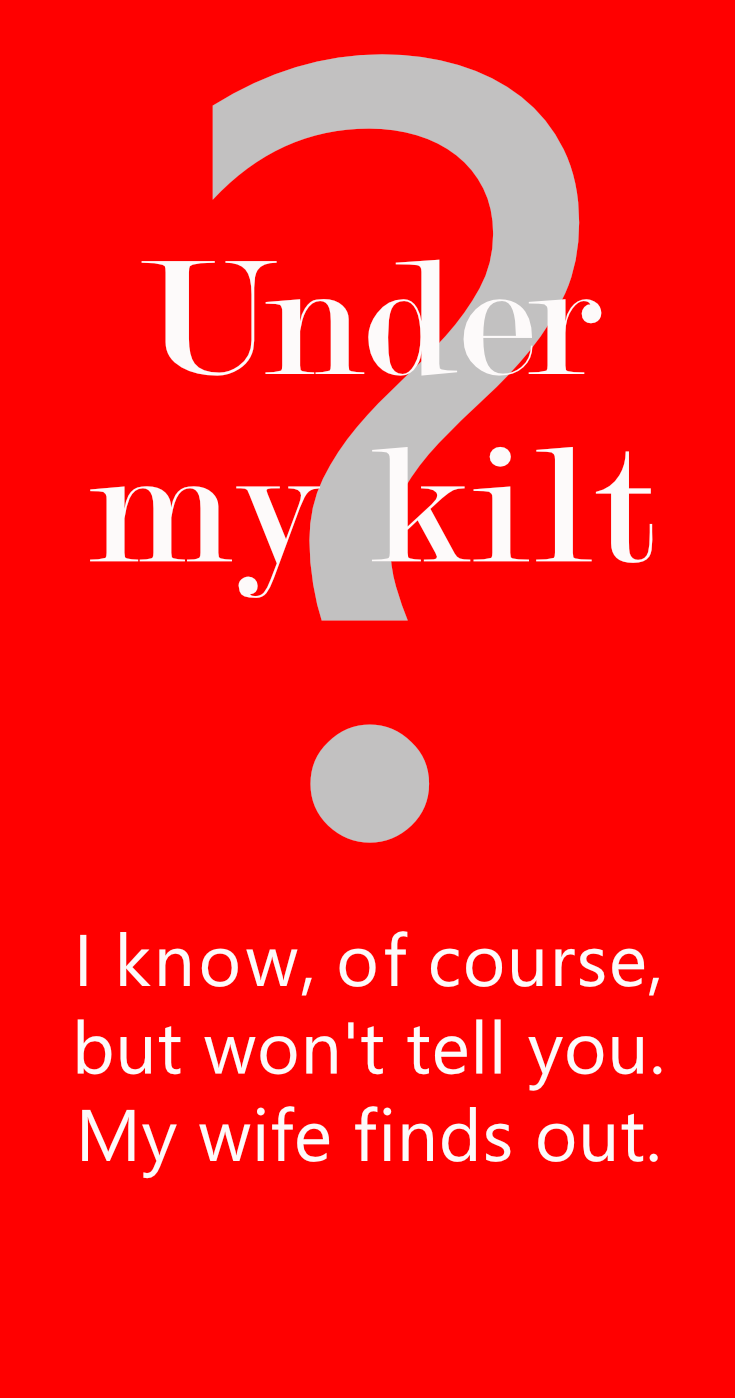 All you need to say.
Why don't more men wear kilts?
They are not men enough. They are afraid of not being regarded manly. They are narcissistic, thinking the world should go into pieces, should they be seen in a kilt. Or they are afraid of the kilt police.
Does a kilt police exist?
O yes. It consists of narrow-minded men zealously watching every man wearing a kilt and whom they shall rebuke, should he dare deviate the slightest from rules, or worse, should he not know them.
Fortunately, they are extremely few, are self-appointed, and with no possibility to punish the offender.
Fotunetely, it is most unlikely that you should ever meet such a guy, at least when you keep away from highland gatherings and the like. I have only read about them.
More seriously, however, is that an imaginary kilt police may exist within the heads of many insecure kilt wearers or potential kilt wearers, making the first category overdress, which, in fact, might draw considerably more attention to them, than had they just worn a kilt and a few accessories, and or causing them to wear their kilt too seldom. The imaginary kilt police no doubt also scares away many potential kilt wearers from starting to wear kilts in the first place.