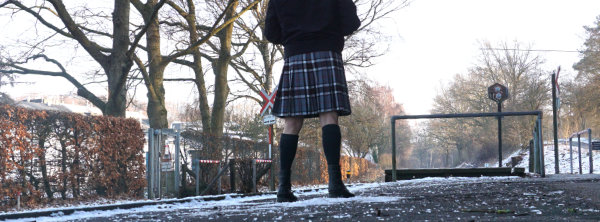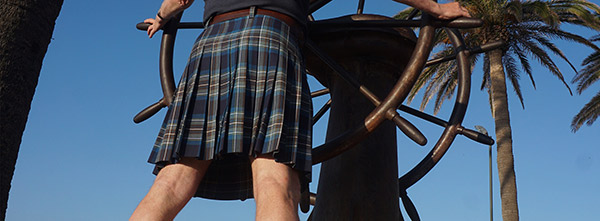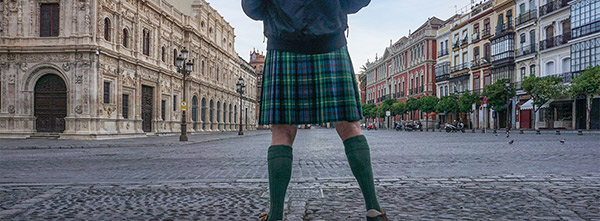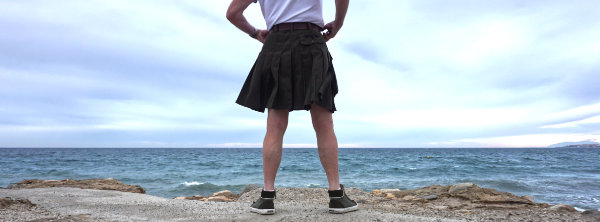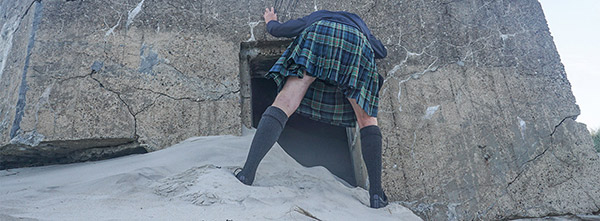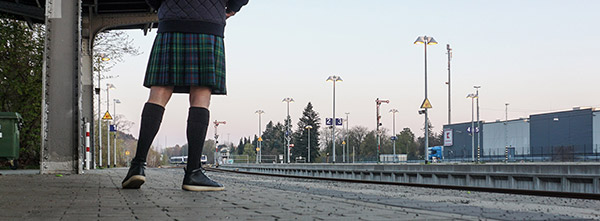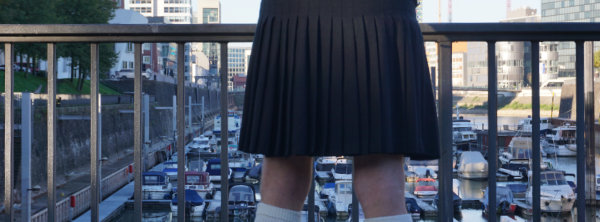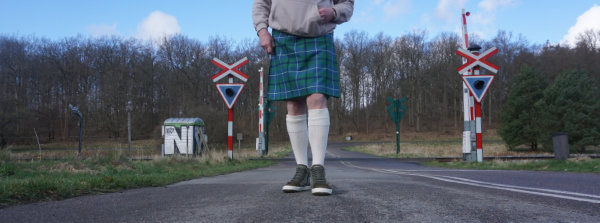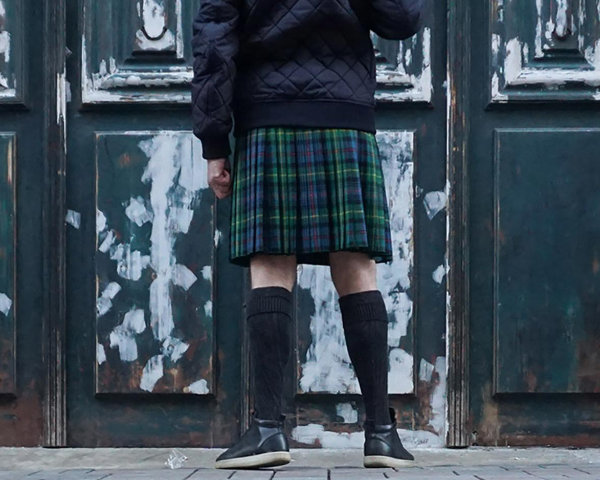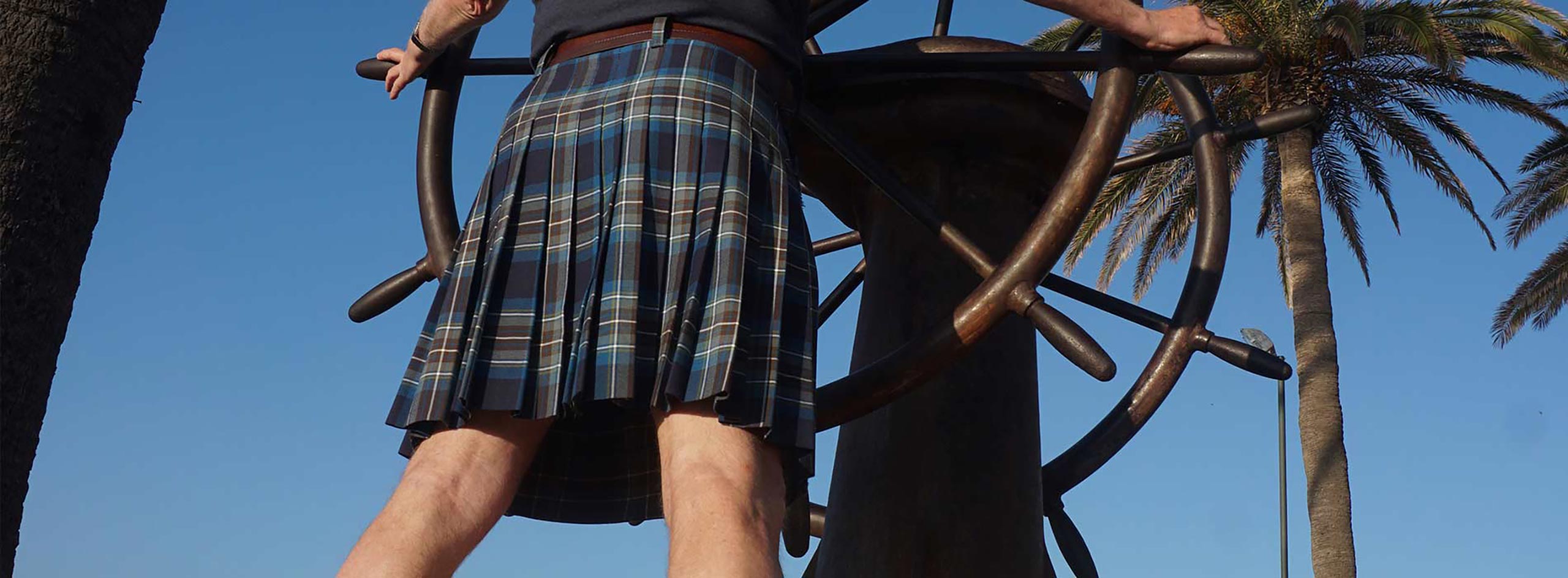
3-yard Kilt, readymade. Polyviscose, approx. 11 oz. Holyrood tartan.
Get the measures right
- and order your kilt
Buying your first kilt is something quite unusual. Most likely you shall buy it online, and often it shall be custom made. Most likely this is the first time in your life where you have to take or have taken measures with the purpose of having something sewn to really fit you. It is not difficult, however, and with a kilt there is some give and take; in contrary to trousers.
The measures
When ordering a kilt your are asked for up to five measures. They are:Waist size
Hip size
Fell length
Kilt length
Your height
If you order a ready-made kilt, you only have to inform about your waist size, the length being with 95% probability 24 inches or 61 cm. But then of course, you still have to find out, whether this length shall fit you, but let's take the measurements step by step.
They use yards, feet, and inches
To a continental European it might seem odd, but it is the way it is. And you already know it from jeans. Americans and the British don't use the metric system; at least not for clothing.Fortunately, a recalculation is not difficult.
The basic measure is the inch. 1 inch or 1" = 2.54 cm.
12 inches make a feet. 1 feet (1 ft in or 1') = 30.5 cm.
3 feet or 36 inches make a yard. 1 yard = 91.5 cm
1. WAIST SIZE
A traditional kilt is supposed to sit about navel (your “natural” waist), i.e. higher than most trousers. A casual kilt can be worn lower, however. Take your measure where you want your kilt to sit and use a tailor's measuring tape like this:
Don’t rely on your trouser size!
The clothing industry, you are used to, is pleasing their customers by lying about facts. If I ordered a kilt in my Tommy Hilfiger or Hugo Boss jeans waist size, it shouldn't fit me at all or, if lucky, fit me badly. And Hilfiger and Boss are NOT alone.
In the kilt world an inch is an inch = 2.54 cm!
A kilt being fastened by means of straps and buckles means that there is some flexibility, like plus 2/minus 1 inch. Even if the flexibility on off-the-peg might be even bigger, like for example 34”-38” = 10 cm, it might not be enough. Therefore, MEASURE. MEASURE. Take a firm measurement.
2. HIP OR SEAT SIZE
It is where you are at the broadest. Take a lose measurement.When buying a readymade kilt you are never asked. Then the seat size is calculated from your waist size.
3. FELL LENGTH
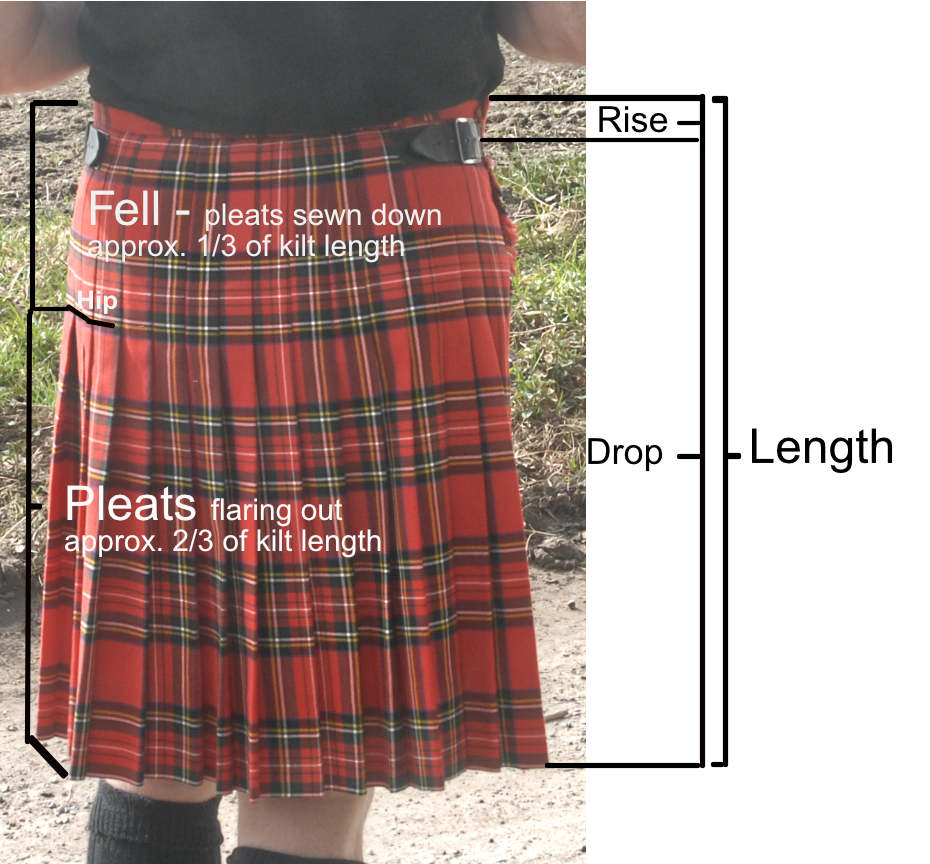
Like mentioned earlier, the fell on a kilt is the part where the pleats are sewn down = From top of the kilt till where you are at the broadest = where your hip or seat size is. In fact, you are only asked about it when ordering a made-to-measure kilt in Pakistan. If a kiltmaker is taking your measures, he'll use it too.
Rule of thirds
If your kilt is to sit at your natural waist and it shall reach to the mid of your knees, the fell length shall be about 1/3 of the kilt length.
The fell measure being optional, this is what you get, unless you select another length between 3" and 10". Better a little too short than too long, to my opinion. If you want your kilt to sit low, for example at jeans waist, you might want to reduce it, or when very tall, increase it. 6", instead of 8", is what to go for.
4. KILT LENGTH
Should you get across the renowned book, So you*re going to wear the kilt by J. Charles Thompson, you’ll see that the author is advocating for short kilts; and that for special purposes they might even be quite short.
On page 54, he says,

At the very longest, the kilt should reach only to the top of the knee cap… Don’t get the kilt too short, either. One of the books tells of a Highland gentleman who has his heavy kilt that he wears for shooting and hillwalking three inches above his knees. That way it does not touch the calf of his leg at all. That may be all very well if you are going to have a kilt, especially for outdoor sports, but for a general-purpose kilt an inch above the top of the knee cap is probably as short as you will want to go, even if you like a shortish kilt.
And on page 99,
Don’t get your kilt too long! The top of the knee cap is the absolute long limit, and up to an inch shorter is acceptable – better in my personal opinion.
A few examples:
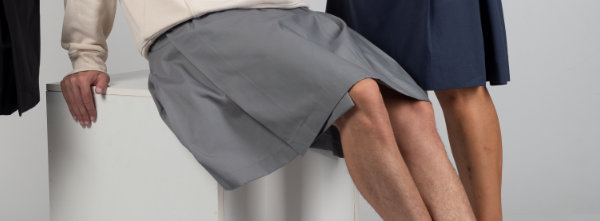
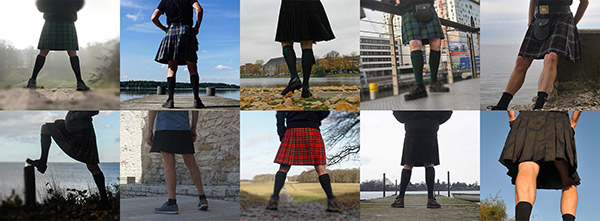
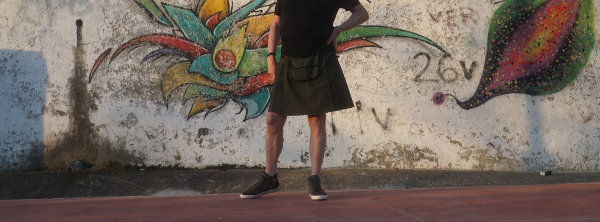
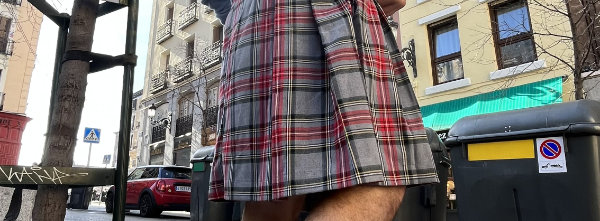
A kilt is a most flexible garment. Below are six different kilts, ranging in length from 24" down to 20", meaning a difference of no less than 10 centimeters, and five of them can be worn according to rules.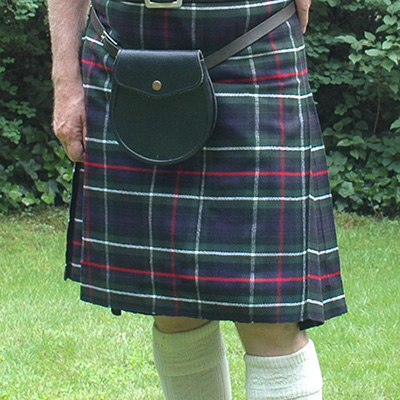
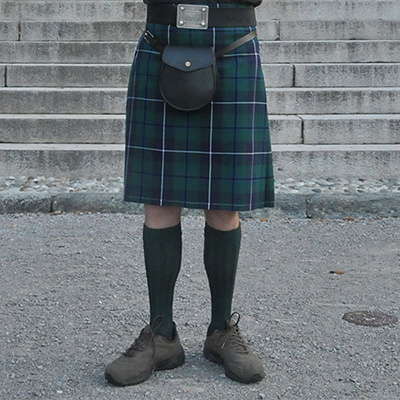
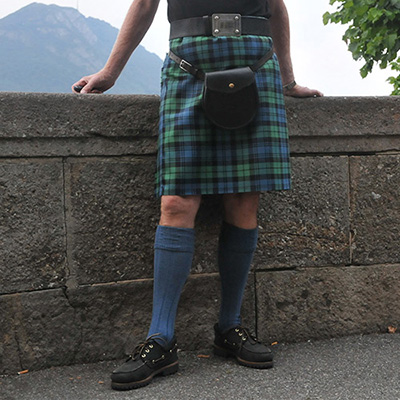
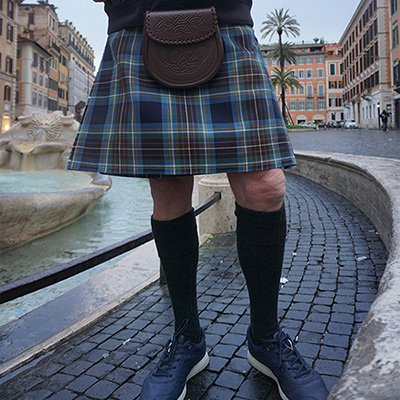
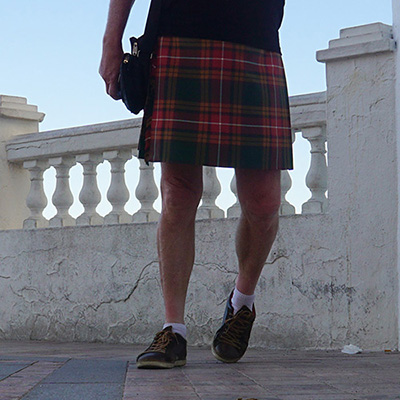
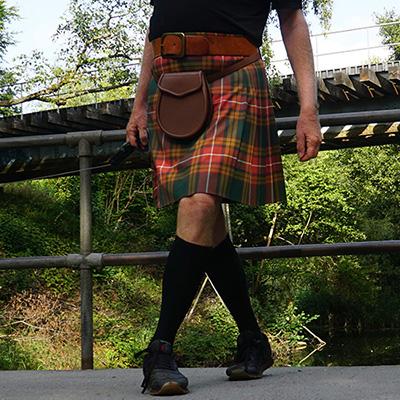
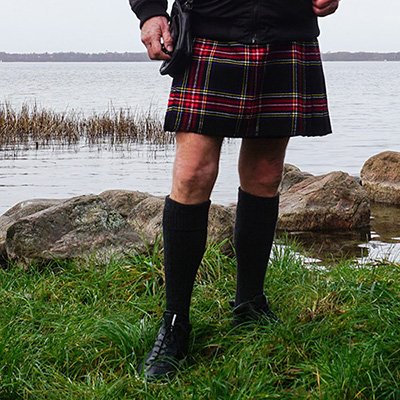
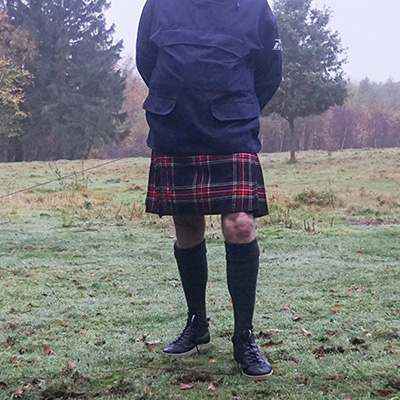
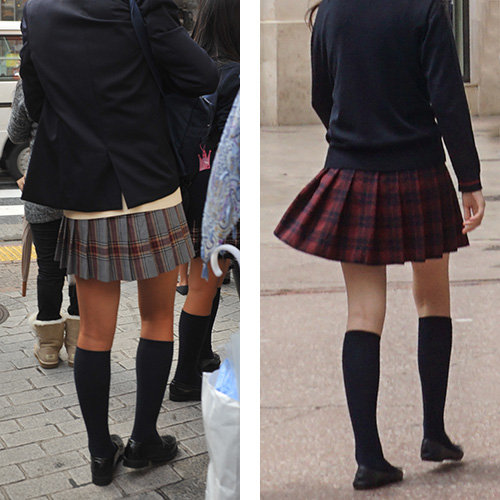
Don't get your kilt TOO short. Especially in countries where school uniforms are common, a short kilt might be associated with schoolgirl's pleated skirts. Also in Scottish environments where kilts are well known, better be within accepted tolerances.
Taking the measure
I have never been able to use the "kneeling" method" often referred to.My advice:
Use a camera or your smartphone, a towel and a belt. The phone or camera should be placed in a vertical position, meaning parallel to the wall and in knee height.
With the belt at navel – or where you should like to fasten your kilt – adjust the towel to the 24” standard length.
With you standing upright (like with your back against the wall) take the picture with the self-timer. If not satisfied adjust the length of the towel until it looks right on the photo and measure the towel.
You might also use the smartphone on a selfie stick. Just NEVER lean forward when taking the picture!
Another way is to have your wife or girlfriend assist you.
Be aware that a custom made kilt cannot be returned, just because it does not fit you! A ready-made 24" long kilt can, even if it might have become more complicated to return a kilt from an EU-country to Scotland or wherever it has come from.
Placed at navel, a 24” kilt goes to the middle of my knee cap. In my case this length is the absolute maximum. A 21” kilt resting on my hips comes to about one inch above my knee cap, thereby still just acceptable. Fastened at navel it should look more like a mini kilt, however. This just to indicate that there is some flexibility – and come in mind we are talking casual kilt wearing, not national dress.
Rule-of-thirds
If you are of average build, you can expect a kilt being around a third of your height to fit.
Being 176 cm = 69", a third is 23". 23" is for me the perfect length = mid/upper knee cap. To be sure my kilts are at the top of my knees, I order them 22.5" or, if half-inch increments are not a possibility, 22". For me, better too short than too long.
5. YOUR HEIGHT
Not all vendors will ask. You are supposed to give your height in feet and inches. It is just to give an impression, whether the length you have ordered seems correct. Varying by 2.54 cm it is not a very precise indicator, but if you order your kilt 20” (51 cm) short and your height is 6’9” (206 cm) you might be asked whether you really want it to be a micro mini kilt?1 foot = 30.5 cm.
My 176 cm equal 176/30.5 = 5' (152.5 cm) plus (176-152.5) = 23.5 cm/2.54 = 9" (22.9 cm) meaning I am 5'9" tall. The remaining 0.6 cm cannot be used for anything.
If you are 183 cm tall, it means 180/30.5 = 6' which is also 72". With the rules of thirds your kilt should probably then be 24" long or 'standard length' and the fell 8".Page revised 2025, February 11.
Next page

Kilt accessories
Which accessories should you wear with your kilt and which are to avoid?
Don't get ripped off on things you don't need. For casual wear they must neither be many nor expensive.